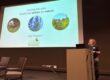


The first biosecurity event developed in partnership between the Animal and Plant Health Agency, Cumbria Wildlife Trust, and Cumbria Local Nature Partnership took place on 3 September at Gosling Sike in Carlisle.
Attended by 30 people from a range of organisations the event was an opportunity for knowledge sharing, learning, and networking, with lots of great presentations and lively conversation. The focus was on the important topic of biosecurity and the risks to the Cumbrian environment from pests, diseases, and invasive non-native species (INNS), particularly related to plants and trees.
We heard from the Animal and Plant Health Agency, the Non-Native Species Inspectorate, and the Forestry Commission about what happens at a national level to reduce biosecurity risks before they enter the country at the borders, their role in horizon scanning and assessing new and emerging risks and threats, and how they monitor, track, and respond quickly when a biosecurity problem is detected.
Cumbria Local Nature Partnership gave an update on the local perspective and how biosecurity plays a role in several priority areas in the draft Local Nature Recovery Strategy and other plans, and highlighted that there are economic, health, and reputation impacts alongside the more obvious environmental ones.
We also heard about the amazing partnership work being done locally by Eden River Trust, South Cumbria Rivers Trust, and West Cumbria Rivers Trust including the Lakes Biosecurity Priority Area and the Don’t Pack a Pest Campaign, Cumbria Wildlife Trust’s efforts to demonstrate best practice in biosecurity at their wildflower nursery including information on Plant Healthy and Plant Passporting, and how Local Action Groups support the work of the Non-Native Species Inspectorate and organisations across Cumbria through incredible volunteer efforts to tackle invasive non-native species on land and in our waters. The importance of academic partnerships, research, and international collaboration was highlighted by Dr Carey Metheringham through her talk on ash dieback disease where she shared an update on the work that’s gone before and recent research findings that give a glimmer of hope.
Key points included;
- Our natural environment is under increasing threat from pests, diseases, and invasive non-native species. In 2016 there were 960 pests and diseases on the Plant Health Risk Register, in 2025 there are 1,400.
- We cannot view plant and tree diseases and pests in isolation. When trees die it has a devastating impact on the wider eco-system and potentially thousands of species that are dependent on those trees.
- It’s not just an environmental problem – depending on the species, type of outbreak, and control measures needed it can be a social, cultural, public health, and/or economic problem too!
- People have a huge role in both the spread and the solution. Responsible purchasing, good procurement processes, careful management of biosecurity, and reporting what you see makes a huge different.
- Speed (and information) is of the essence – recognising and reporting issues and being able to track, trace, and contain where required is vital.
- Biosecurity is everyone’s job – whether it’s a personal purchasing decision or procurement for work – ask questions, buy UK grown, and ask if they are using Plant Passporting / Plant Healthy. If you’re setting up a new plant or tree nursery think about biosecurity best practice from the start – where are you sourcing seeds, what biosecurity measures are needed on site, and how will you respond to an outbreak and a need to report, track, trace, and contain any issues.
- There’s lots of amazing work happening locally and nationally and everyone can help. Some useful apps and resources are linked below.
Thanks so much to the attendees and all of our speakers; David Fletcher and Paul Bratby – Animal and Plant Health Agency, Jody Ferguson, Cumbria Local Nature Partnership, Ben Francis and Courtney Graham – Non-native Species Inspectorate, Adam McGinley – Cumbria Wildlife Trust, Dr Carey Metheringham – researcher, Hilary Clarke – Eden Rivers Trust, Brontë Thomas – Forestry Commission.
Useful links and resources
Biosecurity
Government Biosecurity Guidance
Tree Health Resilience Strategy
Forest Research’s biosecurity guide
Plant Health
UK Plant Health Information Portal
Campaigns
Recording and reporting
e-learning